Today, February 21, we celebrate the feast of Saint Peter Damian (1007-1072), Cardinal Bishop, and Doctor of the Church. Saint Peter is remembered for a life of penance and austerity, and preached rigorous reform. He was a man of integrity and zeal for the Lord, who confronted immorality and dishonesty wherever he found it—beginning within the Church ranks among the clergy. His writings remain instrumental in clarifying Church doctrine on issues such as Purgatory, the Eucharist, the Sacraments, and Christian virtues.
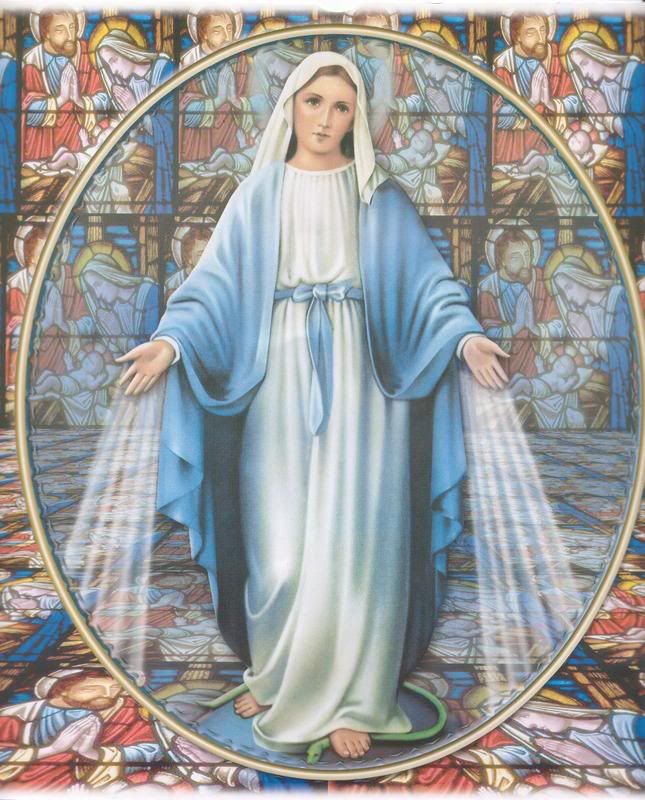
Especially devoted to Our Blessed Mother, Saint Peter Damian wrote about the Blessed Virgin, as well as composed many prayers to her grace. Below, an excerpt written by Saint Alphonsus de Liguori, summarizing some of Saint Peter Damian’s commentary on the Blessed Virgin, as well as a prayer to Mary penned by Saint Peter Damian.
From The Glories of Mary by Saint Alphonsus De Liguori
Peter Damian attests: "that by the prayers of Mary, who stood between the cross of the good thief and that of her Son, the thief was converted and saved, and thereby she repaid a former service." For, as other authors also relate, this thief had been kind to Jesus and Mary on their journey to Egypt; and this same office the Blessed Virgin has ever continued, and still continues, to perform.
And here we say, that although Mary, now in heaven, can no longer command her Son, nevertheless her prayers are always the prayers of a Mother, and, consequently, most powerful to obtain whatever she asks. And therefore, says Saint Peter Damian, "the Blessed Virgin can do whatever she pleases both in heaven and on earth. She is able to raise even those who are in despair to confidence; and he addresses her in these words: "All power is given to thee in heaven and on earth, and nothing is impossible to thee, who canst raise those who are in despair to the hope of salvation." And then he adds, that "when the Mother goes to seek a favour for us from Jesus Christ," (whom the Saint calls the golden altar of mercy, at which sinners obtain pardon), "her Son esteems her prayers so greatly, and is so desirous to satisfy her, that when she prays it seems as if she rather commanded than prayed, and was rather a Queen than a handmaid. Jesus is pleased thus to honour His beloved Mother, who honoured Him so much during her life, by immediately granting all that she asks or desires."
And thus Saint Peter Damian, reflecting on the great power of Mary, and begging her to take compassion on us, addresses her, saying: "O, let thy nature move thee, let thy power move thee; for the more thou art powerful, the greater should thy mercy be." O Mary, our own beloved advocate, since thou hast so compassionate a heart, that thou canst not even see the wretehed without being moved to pity; and since, at the same time, thou hast so great power with God that thou canst save all whom thou dost protect; disdain not to undertake the cause of us poor miserable creatures who place all our hope in thee. If our prayers cannot move thee, at least let thine own benign heart do so; or, at least, let thy power do so, since God has enriched thee with such great power, in order that the richer thou art in power to help us, the more merciful thou mayest be in the will to assist us.
Prayer of Saint Peter Damian to the Blessed Virgin Mary
O holy Virgin,
Mother of God,
help those who implore your assistance.
Turn toward us.
Have you perhaps forgotten us
because you have been elevated
to a position close to God?
No, certainly not.
You know well in what danger you left us.
You know the miserable condition of your servants.
No, it would not benefit such great mercy
as yours to forget such great misery as ours.
Turn toward us, then,
with your power,
for He who is powerful
has made you omnipotent in heaven and on earth.
For you, nothing is impossible.
You can raise even those who are in despair
to a hope of salvation.
There more powerful you are,
the greater should be your mercy.
Turn also to us in your love.
I know.
O Mary, that you are all kindness
and that you love us with a love
that no other love can surpass.
How often you appease the wrath of our Divine Judge,
when He is on the point of punishing us!
All the treasures of the mercy of God
are in your hands.
You will never cease to benefit us, I know,
for you are only seeking an opportunity
to save all sinners
and to shower your mercies upon them.
Your glory is increased when,
through you,
penitents are forgiven and reach heaven.
Turn, then, toward us,
so that we may also be able to go
and see you in heaven.
For the greatest glory that we can have,
after seeing God,
will be to see you,
to love you,
and to be under your protection.
So be pleased to grant our prayer;
for your beloved Son wishes to honour you
by refusing nothing that you ask.
Amen.

Feastday: February 23
Born: 1007 - Died: 1072
St. Peter Damian is one of those stern figures who seem specially raised up, like St. John Baptist, to recall men in a lax age from the error of their ways and to bring them back into the narrow path of virtue. He was born at Ravenna and, having lost his parents when very young, he was left in the charge of a brother in whose house he was treated more like a slave than a kinsman. As soon as he was old enough he was sent to tend swine. Another brother, who was archpriest of Ravenna, took pity on the neglected lad and undertook to have him educated. Having found a father in this brother, Peter appears to have adopted from him the surname of Damian. Damian sent the boy to school, first at Faenza and then at Parma. He proved an apt pupil and became in time a master and a professor of great ability. He had early begun to inure himself to fasting, watching and prayer, and wore ahairshirt under his clothes to arm himself against the alurements of pleasure and the wiles of the devil. Not only did he give away much in alms, but he was seldom without some poor persons at his table, and took pleasure in serving them with his own hands. After a time Peter resolved to leave the world entirely and embrace a monastic life away from his own country. While his mind was full of these thoughts, two religious of St. Benedict, belonging to Fonte Avellana of the Reform of St. Romuald, happened to call at the house where he lived, and he was able to learn much from them about their Rule and mode of life. This decided him and he joined their hermitage, which was then in the greatest repute. The hermits, who dwelled in pairs in separate cells, occupied themselves chiefly in prayer and reading, and lived a life of great austerity. Peter's excessive watchings brought on a severe insomnia which was cured with difficulty, but which taught him to use more discretion. Acting upon this experience, he now devoted considerable time to Sacred studies, and became as well versed in the Holy Scriptures as he formerly had been in profane literature. By the unanimous consent of the hermits he was ordered to take upon himself the government of the Community in the event of the superior's death. Peter's extreme reluctance obliged the abbot to make it a matter of obedience. Accordingly after the abbot's decease about the year 1043, Peter assumed the direction of that holy family, which he governed with great wisdom and piety. He also founded five other hermitages in which he place Priors under his own general direction. His chief care was to foster in his disciples the spirit of solitude, charity, and humility. Many of them became great lights of the Church, including St. Dominic Loricatus, and St. John of Lodi, his successor in the priory of the Holy Cross, who wrote St. Peter's life and at the end of his days becameBishop of Gubbio. For years Peter Damian was much employed in the service of the Church by successive Popes, and in 1057 Stephen IX prevailed upon him to quit his desert and made him Cardinal-bishop of Ostia. Peter constantly solicited Nicholas II to grant him leave to resign his bishopric and return to the solitude, but the Pope had always refused. His successor, Alexander II, out of affection for the holy man, was prevailed upon with difficulty to consent, but reserved the power to employ him in Church matters of importance, as he might hereafter have need of his help. The saint from that timeconsidered himself dispensed not only from the responsibility of governing his See, but from the supervision of the various religious settlements he had controlled, and reduced himself to the conditionof a simple monk. In this retirement he edified the Church by his humility, penance and compunction, and labored in his writings to enforce the observance of morality and discipline. His style is vehement, and his strictness appears in all his works - especially when he treats of the duties of the clergy and of monks. He severely rebuked the Bishop of Florence for playing a game of chess. That prelateacknowledged his amusement to be unworthy, and received the holy man's reproof meekly, submitting to do penance by reciting the psalter three times and by washing the feet of twelve poor men and giving them each a piece of money. Peter wrote a treatise to the Bishop of Besancon in which he inveighed against the custom by which the Canons of that Church sang the Divine Office seated in choir, though he allowed all to sit for the lessons. He recommended the use of the discipline as a substitute for long penitential fasts. He wrote most severely on the obligation of monks and protested against their wandering abroad, seeing that the spirit of retirement is an essential condition of their state. He complained bitterly of certain evasions whereby many palliated real infractions of their vow of poverty. He justly observed, "We can never restore primitive discipline when once it is decayed; and if we, by negligence, suffer any diminution in what remains established, future ages will never be able to repair the breach. Let us not draw upon ourselves so foul a reproach; but let us faithfully transmit to posterity the example of virtue which we have received from our forefathers." St. Peter Damian fought simonywith great vigor, and equally vigorously upheld clerical celibacy; and as he supported a severely ascetical, semi-eremitical life for monks, so he was an encourager of common life for the secular clergy. He was a man of great vehemence in all he said and did; it has been said of him that "his genius was to exhort and impel to the heroic, to praise striking achievements and to record edifying examples...an extraordinary force burns in all that he wrote". In spite of his severity, St. Peter Damian could treat penitents with mildness and indulgence where charity and prudence required it. Henry IV, the young king of Germany, had married Bertha, daughter of Otto, Marquee of the Marches of Italy, but two years later he sought a divorce under the pretense that the marriage had never been consummated. By promises and threats he won over the archbishop of Mainz, who summoned a council for the purpose of sanctioning the annulment of the marriage; but Pope Alexander II forbade him to consent to such aninjustice and chose Peter Damian as his legate to preside over the synod. The aged legate met the king and bishops at Frankfurt, laid before them the order and instructions of the Holy See, and entreated the king to pay due regard to the law of God, the Canons of the Church and his own reputation, and also to reflect seriously on the public scandal which so pernicious an example would give. The nobles likewise entreated the monarch not to stain his honor by conduct so unworthy. Henry, unable to resist this strong opposition, dropped his project of a divorce, but remained the same at heart, only hating the queen more bitterly than ever. Peter hastened back to his desert of Fonte Avellana. Whatever austerities he prescribed for others, he practiced himself, remitting none of them even in his old age. He use to make wooden spoons and other little useful things that his hands might not be idle during the time he was not at work or at prayer. When Henry, Archbishop of Ravenna, had been excommunicated for grievous enormities, Peter was again sent by Alexander II as legate to settle the troubles. Upon his arrival at Ravenna he found that the prelate had just died, but he brought the accomplices of his crimes to a sense of their guilt and imposed on them suitable penance. This was Damian's last undertaking for the Church. As he was returning towards Rome he was arrested by an acute attack of fever in a monastery outside Faenza, and died on the eighth day of this illness, while the monks were recitingMatins round about him, on February 22, 1072. St. Peter was one of the chief forerunners of the Hildebrandine reform in the Church. His preaching was most eloquent and his writing voluminous, and he was declared a doctor of the Church in 1828. His feast day is February 23rd.
Born
Additional Information
Readings
Let us faithfully transmit to posterity the example of virtue which we have received from our forefathers. - Saint Peter Damian.